



The hydrogel mask market is evolving towards skincare solutions that combine high performance with a premium sensory experience. Freshness, application comfort, and a second-skin effect are at the heart of consumer expectations. To discover how our biocellulose hydrogel looks and feels on the skin, watch Cécile’s video demonstration.
Beyond its sensory benefits, biocellulose hydrogel stands out for its unique structure. Unlike conventional polymeric hydrogels, it features a three-dimensional network of natural fibers that acts like a sponge. This distinctive structure plays a key role in serum retention and release.
To gain a deeper understanding of this innovative material, discover the expert insights of Claire, Masks & Impregnated Patches Project Manager at Lessonia.
Does this structural difference allow for greater serum release? To find out, Lessonia conducted comparative tests on face masks and eye patches, with results demonstrating the advantages of biocellulose.
Two Hydrogels, Two Distinct Structures
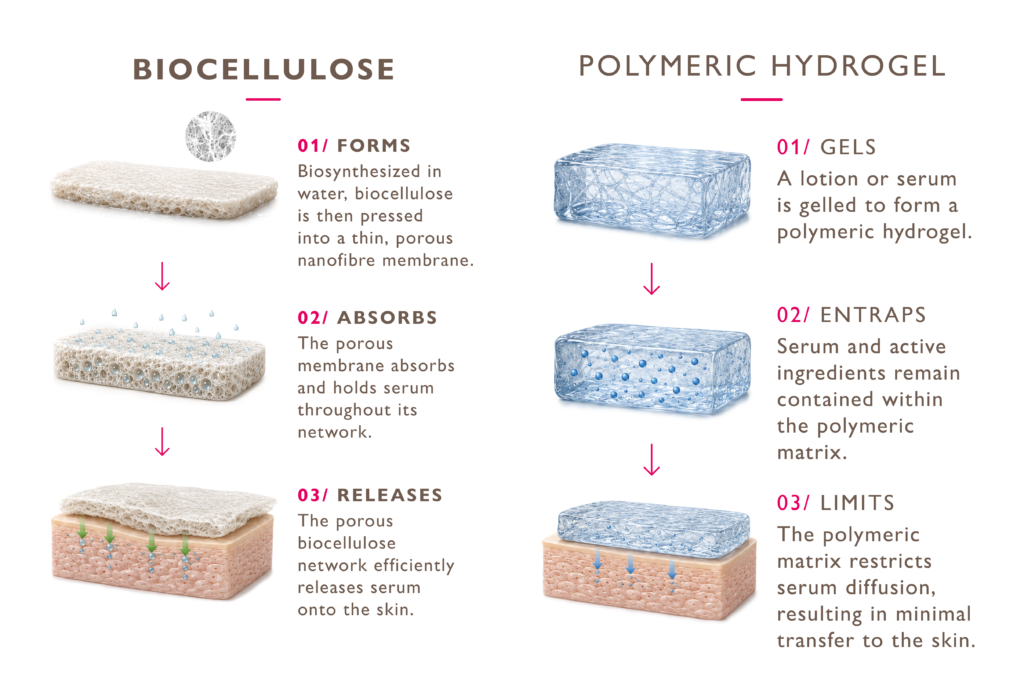
Biocellulose Hydrogel: A Natural Sponge-Like Structure
Produced through bacterial fermentation using a coconut water-based nutrient medium, biocellulose hydrogel features a three-dimensional network of fine natural fibers, similar to a sponge.
This unique structure promotes serum retention and release. Thin and flexible, the material closely conforms to facial contours, delivering a premium sensory experience.
To learn more, discover the expert insights of Claire, Masks & Impregnated Patches Project Manager at Lessonia.
Polymeric Hydrogel: A Gel-Based Matrix
Polymeric hydrogel consists of a network of hydrophilic polymers forming a gel-like matrix capable of retaining the aqueous phase.
Unlike the fibrillar structure of biocellulose hydrogel, this matrix has a different structural organization, which may influence lotion release during application.
Putting Serum Release to the Test
To compare the performance of both materials, Lessonia conducted comparative tests on eye contour patches.
For this test, the biocellulose hydrogel was impregnated with a lotion containing a dye, while the polymeric hydrogel was formulated with the same dye at an identical concentration. This testing protocol allows for a visual comparison of lotion transfer from each material to the contact medium.
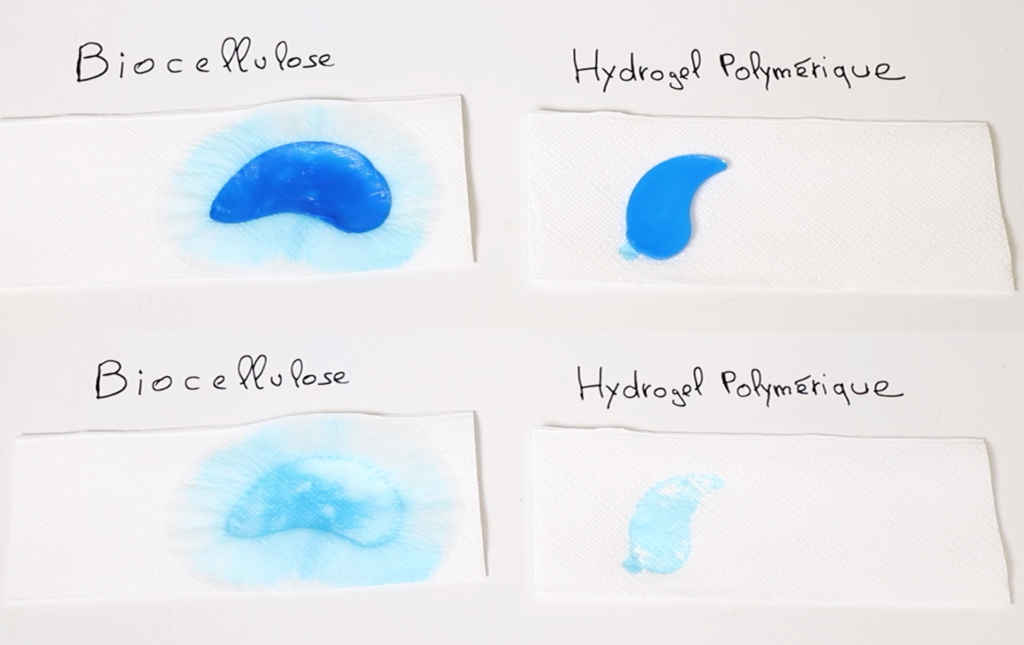
The results show greater dyed lotion transfer from biocellulose hydrogel patches under the tested conditions.
To see the difference in lotion release for yourself, watch our comparative test video.
Why Choose Biocellulose Hydrogel?
Tests conducted by Lessonia demonstrate enhanced lotion release with biocellulose hydrogel under the tested conditions.
Combining effective lotion release, flexibility, and a second-skin effect, this material offers an attractive solution for developing premium face masks and eye contour patches.
Looking to develop your own range of cosmetic masks and patches? As your OEM/ODM partner, Lessonia supports you throughout your product development journey.
Contact us at [email protected] to explore our solutions.

